✍️ Mohit Dhawan
3 September 2026,
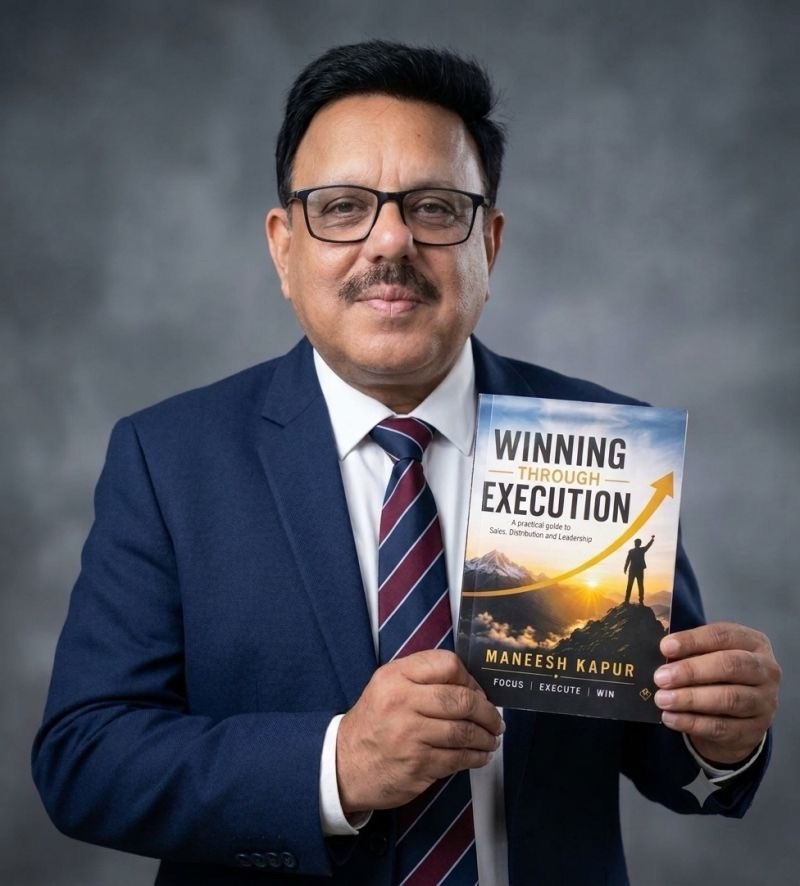
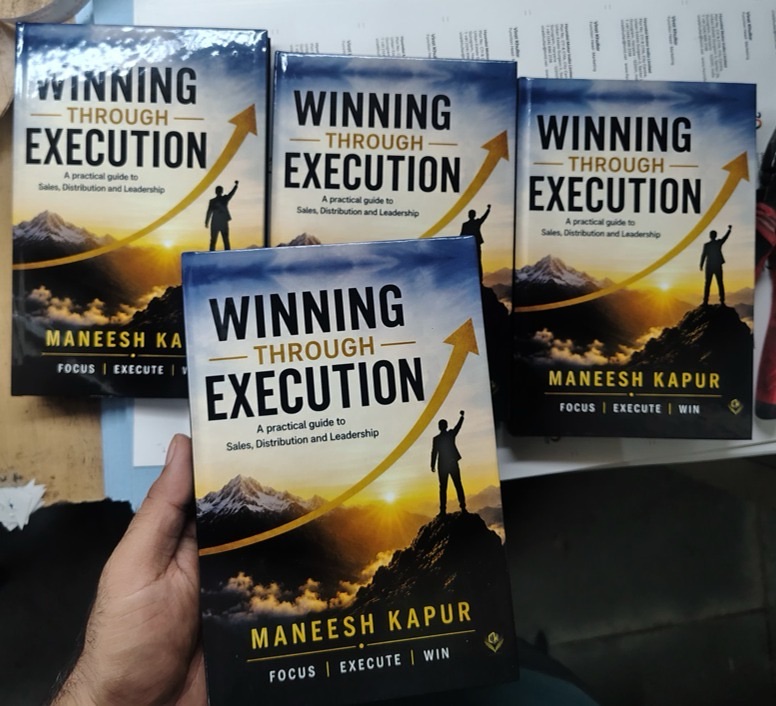
Some books introduce us to their authors. In the case of Winning Through Execution, it is the other way around for me. I have known its author, Maneesh Kapur, since the days when we both worked with PepsiCo India.
I was based in Delhi at the time, while Maneesh was our colleague in the Punjab team. Even then, one of his interests stood out clearly—training and capability building. So, years later, while reading Winning Through Execution – A Practical Guide to Sales, Distribution and Leadership, I felt that the same passion had now evolved into a book, enriched by years of professional experience.
The central idea of the book is simple and practical: a good strategy is important, but results ultimately depend on how well it is executed. Maneesh attempts to bridge the gap between boardroom planning and ground realities. Topics such as territory planning, distributor ROI, working capital, input KPIs and pre-call planning make it more of a practical guide than merely a motivational business book.
WINNING THROUGH EXECUTION
The book also questions some common assumptions in Sales. Does working harder always mean better performance? Do more sales calls necessarily result in more business? The author places greater emphasis on effective execution rather than mere activity. Having spent many years in Sales myself, I find this particularly relevant—being busy in the market and being productive are not always the same thing.
The book’s PERI Square Model—Planning, Execution, Review and Innovation—gives this thinking a structured framework. Particularly useful is the idea that a review should go beyond asking, “How much did we sell?” and instead explore why performance changed and what needs to be done differently going forward.
WINNING THROUGH EXECUTION
The book also offers a practical perspective on month-end target pressure. Instead of constantly focusing on the final sales number, Maneesh suggests paying closer attention to the daily inputs that eventually produce that result.
WINNING THROUGH EXECUTION
Importantly, the book does not restrict Sales to numbers alone. It covers retailer psychology, relationships, leadership, coaching and emotional intelligence, and goes on to discuss technology and AI. Yet, the author maintains that Sales remains fundamentally a people-driven business—technology should support relationships, not replace them.
WINNING THROUGH EXECUTION
Experienced Sales professionals may find some of the concepts familiar, but the book’s simple and practical approach can be particularly useful for young professionals and first-time managers.
For me, the book also has a personal dimension. It is satisfying to see a colleague whose passion for training I witnessed years ago turn that passion into a book.
Perhaps that is also the essence of Winning Through Execution—Strategy shows the way, but Execution takes you to the destination.